The Brain
Everything runs through Home Assistant on a dedicated Raspberry Pi.
My smart home runs on Home Assistant, an open-source platform that ties everything together locally. No cloud dependency, no subscriptions, full control. It runs 24/7 on a Raspberry Pi.
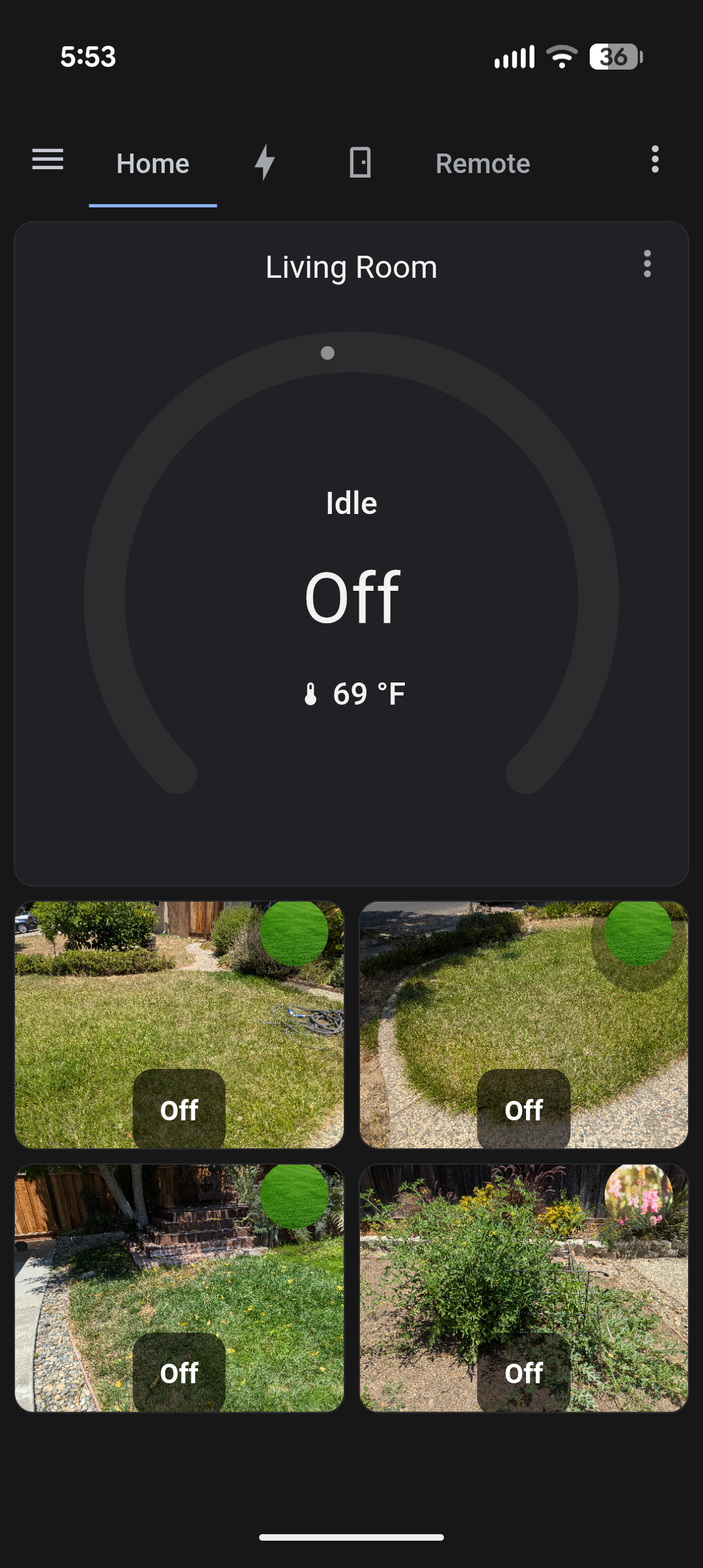
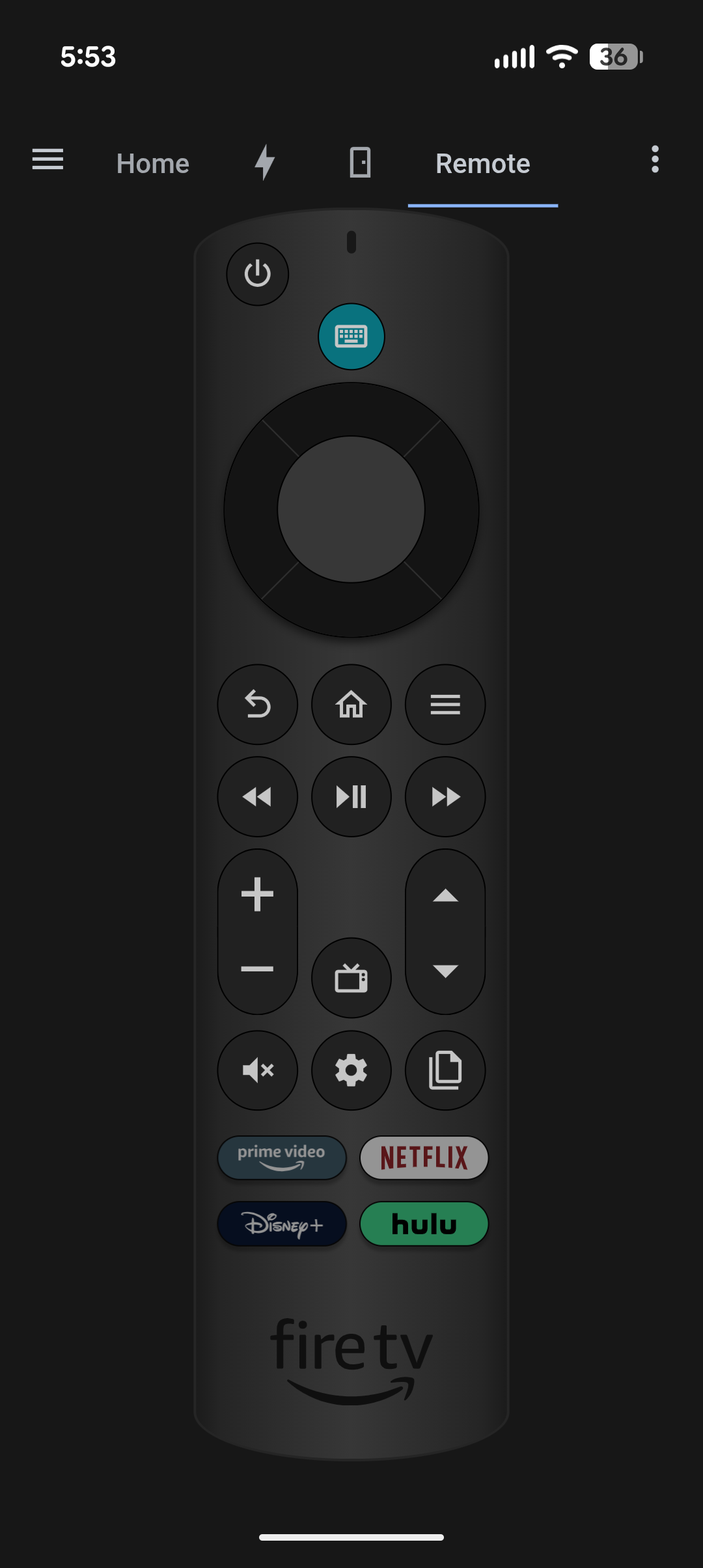
Every sensor, switch, camera, and thermostat in the house reports back to HA. I've built custom dashboards, automations that react in real time, and even piped my doorbell camera through AI for scene descriptions. It's the kind of project that never really ends — there's always one more thing to automate.

The Hardware
What's actually installed around the house.
Raspberry Pi
The server running Home Assistant OS. Low power, always on, handles everything locally.
Smart Thermostat
Connected thermostat with scheduling, automation triggers, and remote control via HA.
Reolink Camera
IP camera with RTSP stream integrated into Home Assistant for motion alerts and recording.
Kasa Smart Plugs
TP-Link KP115 energy monitoring plugs. Track wattage, automate schedules, and cut phantom power.
Shelly Relay
Shelly Plus 1 behind a light switch. Local control, no cloud, works with HA natively.
Rachio Sprinkler
Smart irrigation controller with weather-based scheduling and Home Assistant integration.
Roborock Vacuum
Automated floor cleaning with room-by-room mapping and scheduled runs via HA.
Google Wifi Mesh
Whole-home mesh network keeping everything connected reliably across the house.
AI Doorbell
What happens when you point AI at a doorbell camera and give it a personality.
Doorbell Meets AI Personas
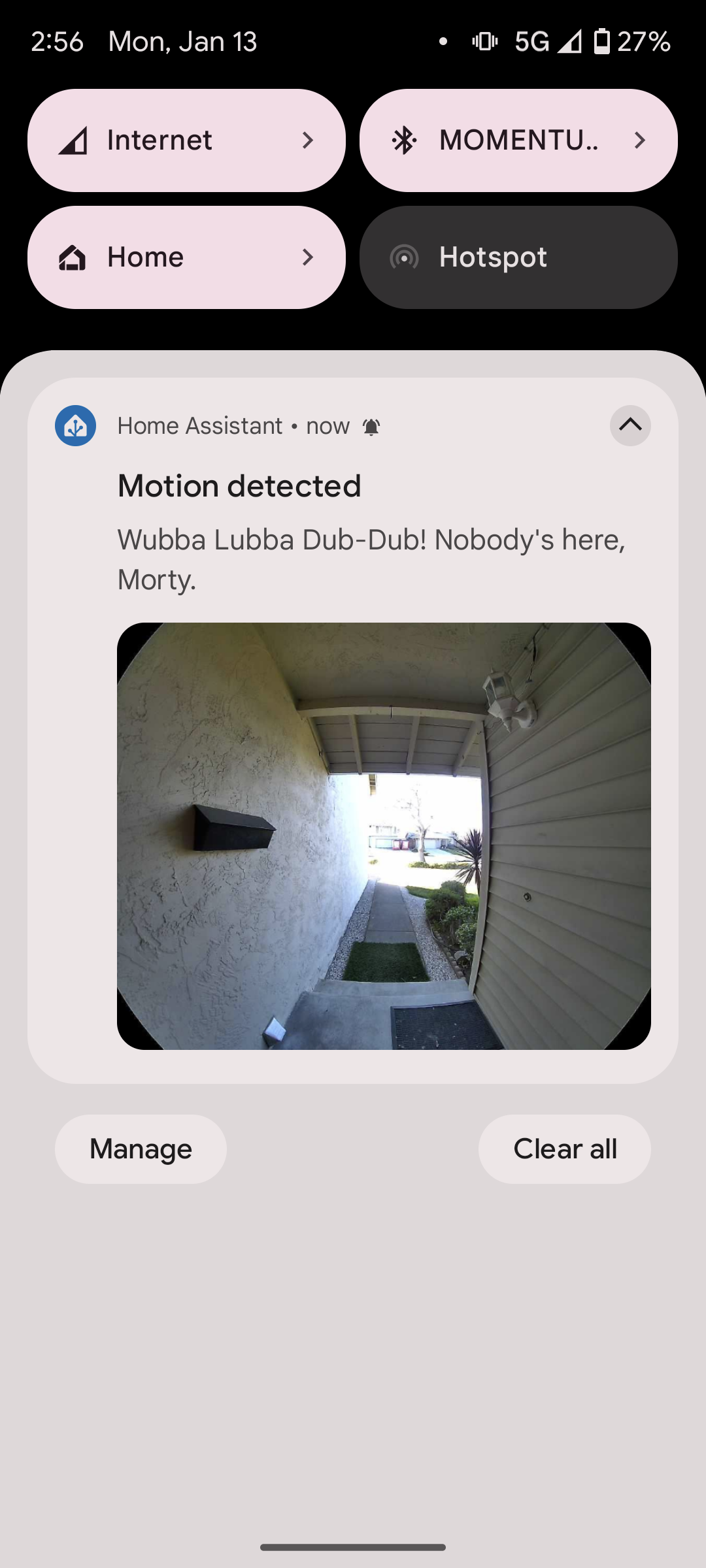
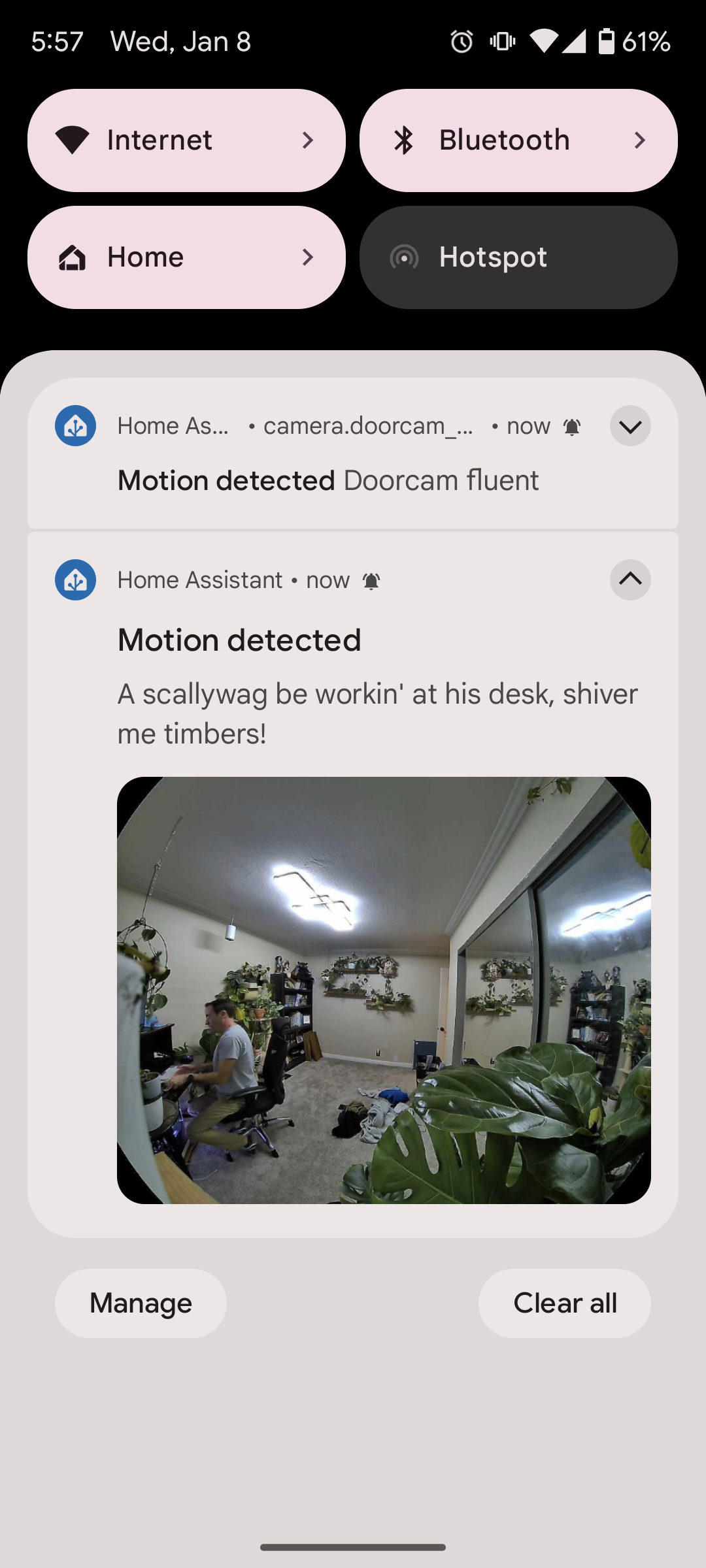
I set up my doorbell camera to capture snapshots on motion, then pass them through an AI model that describes the scene — but in the voice of different characters. A noir detective, a nature documentary narrator, a pirate. The results are hilarious and surprisingly useful for knowing what's happening at the front door without checking a video feed.
The Dashboards
How I keep an eye on everything from one screen.